
When Is a Penile Implant the Best Solution for Erectile Dysfunction?
Erectile dysfunction (ED) is a common condition that can affect a man’s confidence, quality of life, and relationship. It can range from occasional difficulty getting an erection to severe and persistent problems that make sexual intercourse difficult or impossible.
Fortunately, erectile dysfunction can be treated in many ways. Treatment may include lifestyle changes, medications, injections, vacuum devices, or other medical options.
However, some men do not achieve satisfactory results with these treatments. In such cases, a penile implant may provide a reliable long-term treatment option.
But when is a penile implant actually recommended? Does every man with erectile dysfunction need one? And what should a patient know before choosing penile implant surgery?
This article explains when a penile implant may be appropriate, how the procedure works, the main types of implants, recovery, possible risks, and what patients can realistically expect.
What Is a Penile Implant?
A penile implant, also called a penile prosthesis, is a medical device placed inside the penis during surgery. Its main purpose is to provide the rigidity needed for sexual intercourse.
Unlike oral medications, a penile implant does not depend on the penis achieving a natural erection through increased blood flow. Instead, the implanted device provides mechanical rigidity when the patient wants to have an erection.
The implant remains completely inside the body.
In addition, modern penile prostheses are designed to be discreet and are not visible as an external device.
A penile implant is generally considered when erectile dysfunction is severe and other appropriate treatments have not provided satisfactory results.
Does Every Man With Erectile Dysfunction Need a Penile Implant?
No.
This is one of the most important points for men considering treatment.
Erectile dysfunction can have many different causes. It can also vary greatly in severity. Therefore, treatment should always be based on the individual patient’s condition.
For example, a man with recently developed mild erectile dysfunction may improve after treating an underlying medical condition or using appropriate medication.
On the other hand, a man with severe erectile dysfunction caused by diabetes, vascular disease, nerve damage, or previous pelvic surgery may require more advanced treatment.
A penile implant is usually considered when other suitable treatment options have failed, are not tolerated, or are not appropriate for the patient.
What Causes Erectile Dysfunction?
First, understanding the cause of erectile dysfunction is an important part of choosing the right treatment.
In fact, several medical and lifestyle factors can contribute to ED.
Diabetes
For example, diabetes can affect the blood vessels and nerves that are important for normal erections.
Over time, poorly controlled diabetes may contribute to progressive erectile dysfunction. As a result, some men with long-standing diabetes may eventually develop severe ED that becomes difficult to treat with medication.
Vascular Disease
A normal erection requires adequate blood flow to the erectile tissues of the penis.
Conditions that affect the blood vessels can therefore interfere with erectile function.
High blood pressure, vascular disease, and other cardiovascular risk factors may contribute to erectile dysfunction.
Pelvic Surgery
Some pelvic operations can affect the nerves or blood vessels involved in erections.
For example, erectile dysfunction may occur after certain procedures involving the prostate or other pelvic organs.
Neurological Conditions
The nerves involved in sexual function play an essential role in achieving and maintaining an erection.
Therefore, certain neurological conditions or nerve injuries can contribute to erectile dysfunction.
Penile Fibrosis and Structural Problems
Changes in the erectile tissue can also interfere with normal rigidity.
In some patients, erectile dysfunction may occur together with penile curvature or fibrosis. In these cases, both conditions should be evaluated before choosing a treatment.
Medications and Other Medical Conditions
Certain medications and medical conditions may affect erectile function.
Psychological factors can also contribute to ED. Anxiety, stress, depression, and relationship difficulties may worsen erectile problems.
However, psychological and physical causes can occur together. A complete evaluation is therefore important.
When Is a Penile Implant Recommended?
A penile implant may be considered when erectile dysfunction is severe, persistent, and significantly affects the patient’s sexual life.
It may also be considered when other appropriate treatments do not provide satisfactory results.
Common situations include:
- Severe erectile dysfunction that does not respond adequately to medication.
- Inability to use certain ED medications.
- Unacceptable side effects from other treatments.
- Failure of other appropriate treatment options.
- Severe organic erectile dysfunction caused by conditions such as diabetes or vascular disease.
- Erectile dysfunction associated with significant penile structural problems.
For this reason, the decision to undergo penile implant surgery should be made after a detailed medical evaluation.
The doctor should review the patient’s medical history, previous treatments, medications, underlying conditions, and expectations.
Does Failure of ED Medication Mean That a Penile Implant Is Necessary?
Not necessarily.
A patient may fail to respond to medication for several reasons. The problem may involve incorrect use, inappropriate timing, an inadequate treatment plan, or an underlying medical condition that has not been addressed.
Therefore, the first step after treatment failure is usually a careful reassessment.
The doctor may review the medication, investigate possible underlying causes, and discuss alternative treatments.
If appropriate treatments have been tried correctly and still fail to provide a satisfactory erection, a penile implant may then become an option.
What Are the Main Types of Penile Implants?
There are two main categories of penile implants:
- Inflatable penile implants.
- Malleable or semi-rigid penile implants.
Both types are designed to provide sufficient penile rigidity for sexual intercourse. However, their mechanisms and daily use are different.
What Is a Malleable Penile Implant?
A malleable penile implant consists of two flexible rods placed inside the corpora cavernosa.
The penis remains relatively firm after implantation. The patient can manually position it upward for intercourse or downward when it is not needed.
Advantages of a Malleable Penile Implant
A malleable implant may offer several advantages, including:
- Simple operation.
- No pump is required.
- No fluid reservoir is required.
- Fewer mechanical components.
- Easy use for many patients.
For example, a patient who has difficulty using a small pump may prefer a malleable device.
However, the penis remains relatively firm, so the appearance and feel differ from those of an inflatable implant.
What Is an Inflatable Penile Implant?
An inflatable penile implant uses cylinders that can be filled with fluid when an erection is desired.
The system may include:
- Two inflatable cylinders.
- A pump placed in the scrotum.
- A fluid reservoir in three-piece systems.
When the patient wants an erection, he activates the pump. Fluid then moves into the cylinders, creating penile rigidity.
After intercourse, the implant can be deflated.
As a result, the penis can return to a more relaxed state when an erection is not required.
Inflatable implants are often preferred by patients who want greater control over when the penis becomes firm and when it returns to a flaccid state.
How Does a Doctor Choose the Right Penile Implant?
There is no single implant that is best for every patient.
he choice depends on several factors, such as:
- Overall health.
- Age.
- Penile anatomy.
- Manual dexterity.
- Ability to operate the pump.
- Lifestyle.
- Personal preference.
- Previous surgery.
- Presence of penile curvature.
- Presence of fibrosis or scarring.
In addition, the surgeon should explain the advantages and limitations of each option.
The final decision should be made after the patient understands how each implant works and what to expect after surgery.
How Is Penile Implant Surgery Performed?
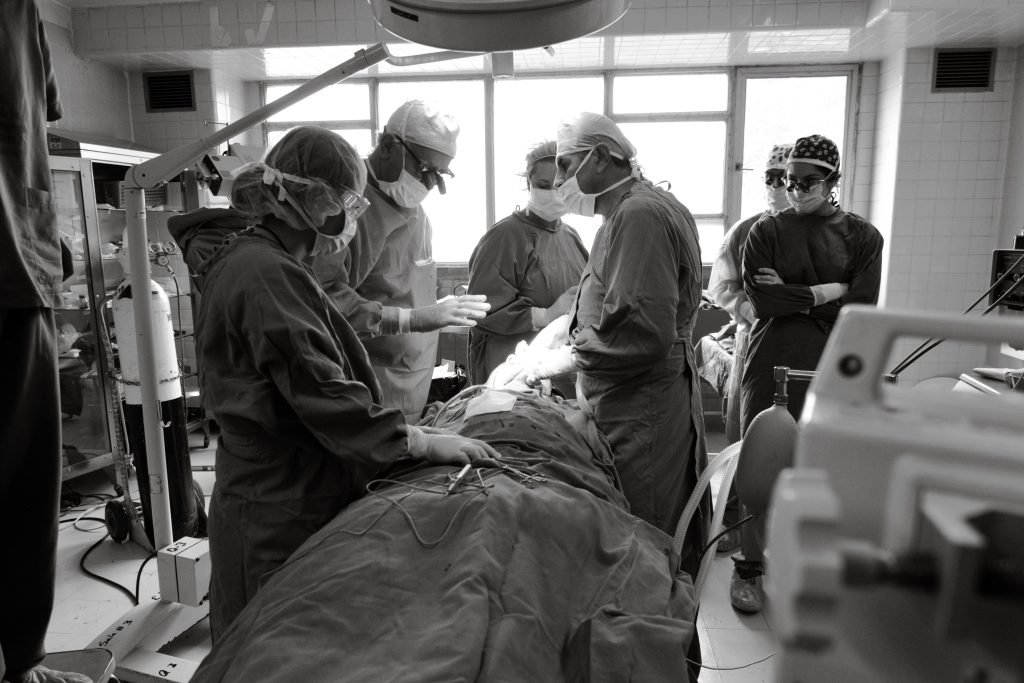
Penile implant surgery is performed under appropriate anesthesia.
During the procedure, the surgeon accesses the corpora cavernosa and prepares the spaces required for the implant.
The appropriate implant size is then selected.
After that, the components are positioned according to the type of prosthesis being used.
For an inflatable penile implant, the pump is placed inside the scrotum. A fluid reservoir is also positioned inside the body when required by the implant design.
The procedure requires careful surgical technique and detailed knowledge of penile anatomy.
Therefore, choosing an experienced surgeon is an important part of the treatment process.
Can Penile Curvature Be Treated During Penile Implant Surgery?
Yes, in selected patients.
Some men have severe erectile dysfunction together with penile curvature or Peyronie’s disease.
In such cases, treating the erection problem alone may not provide the best functional result.
The surgeon should also evaluate:
- The degree of curvature.
- The direction of the curvature.
- Whether the curvature is stable.
- The presence of scar tissue or fibrosis.
- Whether intercourse is difficult because of the curvature.
- The severity of erectile dysfunction.
In some cases, penile curvature can be corrected during the same operation as penile implant placement.
This approach may be useful for carefully selected patients with both severe erectile dysfunction and significant curvature.
Does a Penile Implant Affect Sexual Sensation?
A penile implant is designed to provide rigidity. It does not replace the nerves responsible for penile sensation.
Therefore, implantation does not automatically mean loss of sexual sensation.
However, each patient is different
The final sexual experience may depend on the patient’s condition before surgery, underlying diseases, previous procedures, and the health of the nerves involved in sensation.
For this reason, patients should discuss their expectations and any existing sensation problems with their surgeon before surgery.
Does a Penile Implant Affect Ejaculation?
A penile implant treats erectile dysfunction. It does not directly treat ejaculation disorders.
If a man was able to ejaculate before surgery, implantation does not automatically mean that he will lose the ability to ejaculate.
However, ejaculation problems that existed before surgery should be evaluated separately.
It is also important to distinguish between ejaculation, orgasm, and erection. These are different aspects of sexual function.
Does a Penile Implant Affect Fertility?
A penile implant is not a treatment for male infertility.
It does not increase sperm production or directly improve sperm quality.
Therefore, a man who has both erectile dysfunction and fertility problems should have both conditions evaluated.
For example, a patient may have severe erectile dysfunction and also have low sperm count. In this situation, the two problems require separate treatment plans.
Men who are planning to have children should discuss fertility with their doctor before undergoing penile implant surgery.
Is a Penile Implant a Permanent Solution?
A penile implant can provide a long-term solution for men with severe organic erectile dysfunction.
However, patients should understand that implantation is a significant treatment decision.
Removing the implant later does not necessarily mean that natural erections will return to the same condition they were in before surgery.
Therefore, the decision should be made only after discussing all appropriate treatment options.
Patients should understand the benefits, limitations, possible complications, and long-term considerations before surgery.
Can a Penile Implant Be Removed or Replaced?
In some situations, a penile implant may need to be removed or replaced.
This can happen because of infection, mechanical problems, or other complications.
In addition, some devices may eventually require revision or replacement.
However, this does not mean that the implant should be viewed as a temporary treatment.
Instead, it should be considered a long-term solution for men who are appropriate candidates.
What Are the Benefits of a Penile Implant?
For properly selected patients, penile implants can offer several important benefits.
These may include:
- Reliable penile rigidity.
- Greater control over the timing of erections.
- No need to depend on ED medication before intercourse.
- Long-term treatment for severe erectile dysfunction.
- High satisfaction among appropriately selected patients.
- The ability to address certain structural problems during the same surgery.
In addition, an inflatable implant allows the patient to have rigidity when needed and a more relaxed appearance afterward.
What Are the Possible Risks of Penile Implant Surgery?
Like any surgical procedure, penile implant surgery has potential risks.
Possible complications include:
- Infection.
- Bleeding or hematoma.
- Pain.
- Swelling.
- Wound-healing problems.
- Device malfunction.
- Changes in sensation.
- Mechanical complications.
- The need for revision surgery in selected cases.
The actual risk varies between patients.
Therefore, the surgeon should discuss individual risks during the preoperative consultation.
Good medical preparation, appropriate control of chronic conditions, proper surgical technique, and careful postoperative follow-up can all help reduce complications.
What Should You Expect After Penile Implant Surgery?
Recovery takes time.
During the early postoperative period, some patients may experience:
- Swelling.
- Bruising.
- Pain or discomfort.
- A feeling of tightness.
- Temporary changes in appearance.
These symptoms usually improve as healing progresses.
However, patients should not judge the final result during the first few days after surgery.
The surgeon will provide specific instructions about wound care, physical activity, medication, and follow-up appointments.
When Can You Resume Sexual Activity?
Sexual intercourse should not be resumed immediately after penile implant surgery.
The body needs adequate time to heal.
The exact timing varies according to the surgical procedure and the patient’s recovery.
Therefore, the patient should wait until the surgeon confirms that it is safe to use the implant for sexual activity.
Trying to use the device too early may interfere with healing.
Can a Man Live Normally With a Penile Implant?
After recovery, many men are able to return to their normal daily activities.
The implant remains inside the body, so there is no external device that needs to be worn.
With an inflatable implant, the pump remains concealed in the scrotum.
In addition, once the patient becomes familiar with the device, using it can become a normal part of his sexual routine.
The recovery period and adjustment process vary from one person to another.
Does a Penile Implant Guarantee Sexual Satisfaction?
A penile implant is designed to provide the rigidity required for sexual intercourse.
However, sexual satisfaction depends on more than erection quality.
Other factors include:
- Sexual desire.
- Penile sensation.
- Ability to reach orgasm.
- Emotional wellbeing.
- Relationship quality.
- Communication between partners.
- Expectations before surgery.
For this reason, realistic expectations are an essential part of preoperative counseling.
When Should You Consider a Penile Implant?
A penile implant may be worth discussing with a specialist if you have:
- Persistent erectile dysfunction.
- Severe erectile dysfunction.
- Poor response to appropriate ED medications.
- Significant side effects from other treatments.
- A medical condition that prevents the use of certain ED medications.
- Erectile dysfunction after pelvic surgery.
- Erectile dysfunction associated with significant penile curvature.
Ultimately, the decision should be based on a complete medical evaluation.
A specialist can determine whether the problem is suitable for a penile implant or whether another treatment may provide a better option.
Frequently Asked Questions About Penile Implants
Is a penile implant suitable for every man with erectile dysfunction?
No. A penile implant is generally considered for men with significant erectile dysfunction who have not achieved satisfactory results with appropriate non-surgical treatments or cannot use them.
Is a penile implant better than erectile dysfunction medication?
Not necessarily. Medication may work very well for some men. However, a penile implant may be more appropriate for men with severe ED who do not respond adequately to other treatments.
Does a penile implant look natural?
Inflatable implants can provide a more natural transition between the erect and flaccid states. The implant itself remains concealed inside the body.
Does a penile implant affect sexual sensation?
The implant is designed to provide rigidity and does not directly replace the nerves responsible for sensation. Individual results depend on the patient’s underlying condition.
Can a penile implant be combined with treatment for penile curvature?
Yes. In some cases, significant penile curvature can be treated during the same operation as penile implant placement.
Does a penile implant treat infertility?
No. A penile implant treats erectile dysfunction. It does not directly treat low sperm count, poor sperm motility, or other causes of male infertility.
How long does recovery take?
Recovery varies from patient to patient. The surgeon will provide specific instructions about activity, wound care, and when the implant can safely be used.
Is penile implant surgery reversible?
It should be considered a long-term treatment decision. Removing the implant does not necessarily restore natural erectile function to its previous state.
Conclusion
A penile implant is not the first treatment for every man with erectile dysfunction. However, it can be an effective long-term solution for men with severe organic erectile dysfunction when appropriate non-surgical treatments have failed or are not suitable.
The decision should always begin with a detailed evaluation.
The doctor should identify the likely cause of erectile dysfunction, review previous treatments, assess the patient’s general health, and discuss the available implant options.
In addition, men with penile curvature, fibrosis, or other structural problems may require a more specialized treatment plan.
Most importantly, patients should understand how the implant works, what recovery involves, and what results they can realistically expect.
For this reason, consultation with an experienced men’s health and sexual medicine specialist is an important step before deciding on penile implant surgery.
If you have persistent erectile dysfunction and previous treatments have not provided satisfactory results, a specialized evaluation can help determine whether a penile implant is an appropriate option for you.